
Information for Consumers
Prescription Hearing Aids vs. Over-the-Counter Hearing Aids:
What Are Prescription Hearing Aids?
Prescription hearing aids are medical devices chosen, selected with specific prescription needs, fit, and programmed by a licensed hearing care professional. Prescription hearing aids have a broad fitting range, making them appropriate for individuals with hearing levels ranging from normal to a profound loss. The brand of hearing aid also matters.
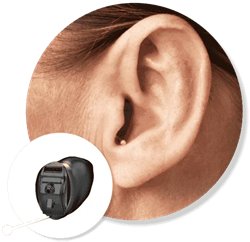
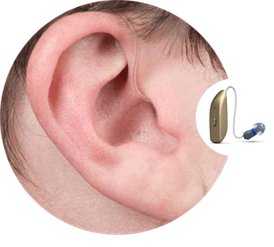
Key Features: Prescription Hearing Aids
Requires a comprehensive hearing evaluation by a licensed audiologist including middle ear testing and inner ear testing.
Requires speech in noise testing, tinnitus evaluations as needed, and Ultra-high-frequency testing as needed.
Effective fitting depends on individual ear acoustics and hearing science
Programmed based on your specific hearing test results and extreme caution is taken for pitches/areas where a person still has hearing within normal limits.
Requires professional expertise with fitting formulas.
Requires in person verification of programming via real ear measurements/speech mapping
Requires in-situ testing: Measures hearing thresholds directly through the hearing aid for a more accurate, personalized fit that accounts for individual ear canal acoustics.
Requires test results from comfortable levels and Uncomfortable levels.
Ongoing follow-up care, adjustments, and counseling for you and your loved ones from an audiologist.
Advanced technology from leading brand in the industry due to extensive research and development as they focus to improve background noise, speech clarity, provide with tinnitus management programs, and offer far more than just Bluetooth connectivity to smart phones.
What Are Over-the-Counter (OTC) Hearing Aids?
OTC hearing aids are self-fit devices available without a prescription.
They are designed for adults who have a mild to moderate flat hearing loss.
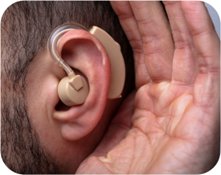
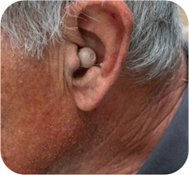
Key Features: Over-the-Counter (OTC) Hearing Aids
Purchased online or in retail stores
No hearing test required or requires client to test their own hearing
Users can adjust settings themselves using buttons or a smartphone app
Lower cost
Lack customization and in-person individual programming of hearing aids by an expert
Limited or no support
Entry basic-level technology (provide basic sound and shaping)
Most lack directional microphones (for complex noise reduction features)
Makes everything louder but not necessarily more clear (some users report hearing louder but not clear because the sound it's amplified)
While over-the-counter (OTC) hearing aids can be a cost-effective option for individuals with certain types of hearing loss, they are not appropriate for all hearing loss configurations. When used outside of their intended range, they may result in issues such as over-amplification, distortion, uncomfortable loudness, potential risk to existing hearing, and reduced speech clarity.
If prescription hearing aids are not currently within your budget, we encourage you to visit our Community Resources page for helpful programs and support options.
1. Generalized Amplification
OTC hearing aids are designed to amplify sound uniformly across all frequencies, which means they don't take into account the specific frequencies that need more help in individuals with hearing loss.
For someone with high-frequency hearing loss, for example, certain higher-pitched sounds (like speech consonants or birds chirping) are harder to hear, but the lower frequencies (like bass sounds) are usually preserved.
Example of a Mild to Moderate High Frequency Hearing Loss
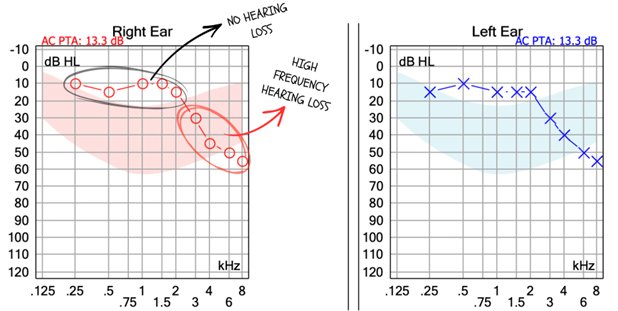
If these devices amplify all frequencies equally, it can lead to over-amplification in areas where hearing is normal or even sensitive which can result in discomfort and distortion.
2. Distortion and Unpleasant Loudness
When the amplification is too broad, even normal sounds that should be easy to hear can become distorted or too loud. This makes the sound unnatural and can reduce the clarity of speech or other important sounds.
For someone with mild to moderate hearing loss, or a mild conductive hearing loss (CHL), this kind of amplification can exacerbate the situation. Soft speech sounds might be too loud, while normal conversations might become muddy or garbled.
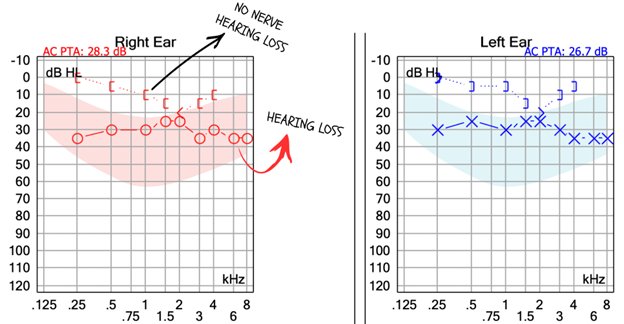
Below is an example of a mild conductive hearing loss (CHL). With a CHL a patient will have a hearing loss that is not in the cochlea or the auditory nerve. Instead these patients may have a blockage like earwax, fluid buildup, an infection, negative pressure, or damage to the tiny middle ear bones. This will affect sound transmission through the outer and/or middle ear to the inner ear (cochlea and auditory nerve), which can make sounds seem quieter or muffled.
Many times a patient may have an untreated CHL not even know if they have this type of issue and will get OTCs before consulting with their physician or having an audiological evaluation, which can cause further issues.
Example of a Mild Conductive Hearing Loss (CHL)
3. Potential Risk to Hearing
OTC hearing aids will over-amplifiy these types of hearing losses which could damage hearing in areas where there's no existing loss. If the volume is cranked too high, it can actually harm sensitive parts of the ear (e.g., the cochlea) that are still functioning well, particularly in the low-frequency range.
Below is an example of a mild “cookie-bite” hearing loss. The normal hearing range is towards the top of these graphs between -10 dB HL and 20 dB HL (the numbers on the left side of the graph). If a patient with this hearing loss were to use OTC hearing aids everything would be amplified whether they needed it or not. The areas where this patient has no hearing loss will be over amplified which can result in additional hearing loss.
Example of a Mild to Moderate “Cookie-Bite” Hearing Loss
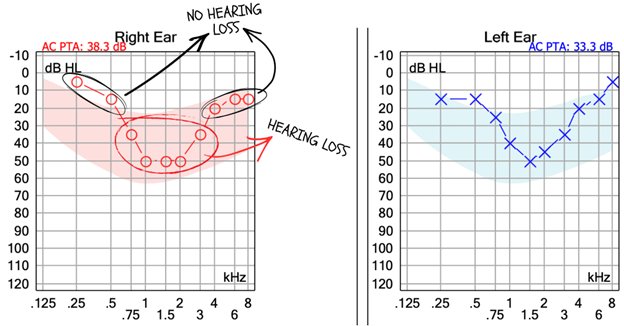
Prolonged exposure to loud sounds, even if they seem normal or soft to the person with hearing loss, could potentially worsen the hearing situation over time.
4. Speech Understanding Issues
Because these devices don’t have the precision of more customized, professionally fitted hearing aids, it can be harder to understand speech, particularly in environments with background noise.
Below are two examples of hearing loss types (sloping and rising hearing loss) that would not do well with OTC hearing aids because they have various frequency responses that are within the normal hearing range which is between -10 to 20 dB HL. Customized hearing aid programming is necessary for these types of hearing losses to get the maximum speech understanding.
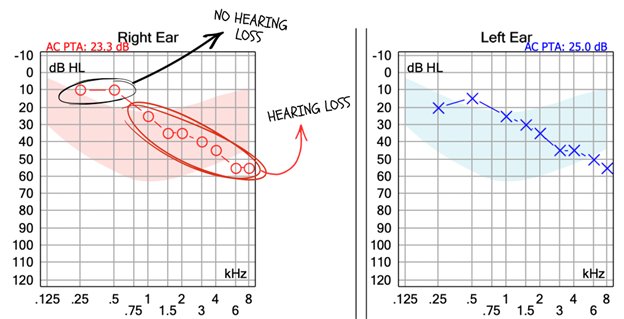
Example of a Mild to Moderate Rising Hearing Loss
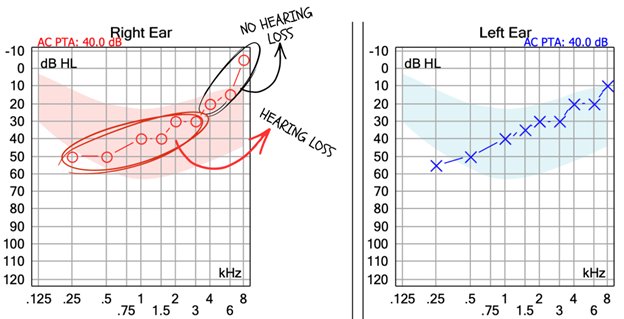
The amplification might interfere with the way speech is processed, making it harder to distinguish between important sounds and background noise.
So What is the Best Alternative for your specific hearing needs?
Professionally Fitted Hearing Aids
Custom-programmed hearing aids are a better solution for those with specific hearing loss patterns. These hearing aids are calibrated by an audiologist to address the unique needs of an individual's hearing loss, amplifying the frequencies where there is diminished hearing and leaving others unaffected.
They also allow for fine adjustments, such as adjusting for different listening environments, which OTC hearing aids cannot do as effectively.
So, while OTC hearing aids can be helpful for those with minor or generalized hearing issues, they’re not a one-size-fits-all solution, especially for people with specific hearing loss types. It’s important for people to be mindful of these issues when considering them.
Custom prescription hearing aids cost more because they are made such for you and each device is programmed specifically for each ear by a professional. Understanding this is crucial when making your decision and consulting a professional hearing specialist can provide the best solutions.
Call today to arrange a comprehensive hearing test. Knowing your exact hearing loss can make all the difference, and our dispensing audiologists are experts in personalized hearing aid solutions.
Start With the Right Evaluation
Always have a comprehensive hearing evaluation before purchasing hearing aids, this will help rule out any medical issues.
Prior to your comprehensive hearing test your provider must check for earwax buildup, as moderate to severe wax can affect test results (make sure your ears are fee of wax before scheduling the appointment).
Sudden hearing loss requires immediate attention. A hearing test should be completed within 72–78 hours, and an ENT visit should occur within 48 hours, as there is a short window for possible treatment.
If you experience vertigo or tinnitus, inform your Audiologist promptly.
Be sure to share any pre-existing medical conditions (such as diabetes, high blood pressure, or cancer) and provide a list of current medications.
Take Your Time, Avoid Pressure
Be cautious of providers who pressure you to purchase hearing aids the same day.
Be cautious of “limited-time” promotions or sales tactics that pressure you to make a quick decision.
Bring a trusted family member or friend to your appointment to help listen, ask questions, and support your decision-making.
Choose the Right Provider
Make sure to verify your provider’s credentials and licensure with the appropriate regulatory board, and also review their professional history or personal record for added confidence.
Consider purchasing from an established, privately owned practice where continuity of care and personalized service are often more consistent.
Make sure your provider offers counseling specific to your type of hearing loss, hearing aids are not one-size-fits-all.
Understand Exactly What You’re Purchasing
Before moving forward, make sure you clearly understand:
The brand, model, and technology level.
Whether the technology is current generation.
Warranty coverage and replacement policies.
Trial periods. In CA we have a 45 day trial period.
Deductibles or loss/damage fees.
What parts and services are included.
Whether follow-up visits are included (ongoing care is essential).
Whether verification tests such as Real Ear Measurements (speech mapping) and test box testing are performed and included.
Annual hearing evaluations are recommended to monitor changes and keep your devices performing at their best.
Choose Reputable Manufacturers
Providers should select hearing aids from the leading manufacturers in the industry whose products can be serviced or adjusted at other clinics, in different states, or even internationally if needed. This ensures greater flexibility, long-term support, and continuity of care wherever you may be.
Be sure to ask whether the hearing aids being recommended are private label devices, as these may limit where your hearing aids can be serviced or adjusted outside of the original provider’s office.
While online options may appear less expensive at first, they often lack proper testing, verification, adjustments, and follow-up care, which can result in higher long-term costs and frustration.
Always Get a Written Purchase Agreement
Your agreement should clearly outline:
Brand, model, and technology level
Serial numbers
Warranty details
Trial (satisfaction) period
Loss and damage information
Providers license and credentials
Included services and their duration
OTC hearing aids are self-fit devices available without a prescription. They are designed for adults who have a mild to moderate flat hearing loss and may not match your hearing loss.
Important clinical caveats: You should NOT rely on OTC hearing aids alone if:
Your Hearing loss is sudden or recent, It's one-sided, fluctuating or worsening, if you have symptoms like tinnitus, dizziness, or ear pain. Recommendation: Get a baseline hearing test at a clinic, know your type and level of hearing loss. Your insurance might cover the test.
Pasadena Office
Rancho Cucamonga
San Dimas Office
Our Purpose
Doctors of Hearing, Inc. is dedicated to improving the quality of life of the hearing-impaired community. Doctors of Hearing, Inc. is your trusted source for the information needed to make informed decisions on hearing aid purchases. Doctors of Hearing, Inc., provides expert testing and proper fitting of hearing aids at a reasonable price.
Company Details
Doctors of Hearing, Inc. is a family-owned audiology practice serving patients through its offices in Pasadena, Rancho Cucamonga, and San Dimas, California. Dr. Norma Camacho, Au.D., CCC-A, ABA, is a licensed dispensing audiologist who is board certified by the American Board of Audiology and holds the ASHA Certificate of Clinical Competence, a nationally recognized credential. She is also a member of the Academy of Doctors of Audiology.
Phone numbers:
626 639-3182 Pasadena Office
909 481-2834 Rancho Cucamonga Office
626 250-6642 San Dimas
About Us
Legal